Central PA Spray Foam

Spray Foam Insulation — Superior Energy Sealing

Spray foam creates an air-tight thermal barrier that standard insulation can’t match. Whether you’re upgrading an attic, sealing a crawl space, or insulating a new wall cavity, closed-cell spray foam delivers energy savings, moisture control, pest resistance, and structural benefits that pay back for decades. Central PA Spray Foam specializes in closed-cell spray foam installation throughout central Pennsylvania.

Why Spray Foam Insulation Works

Spray foam is our core business, not an add-on service. From residential insulation upgrades to large commercial projects, we recommend and install the right spray foam system for your space — always as part of a whole-home or whole-building approach.

  • Superior R-Value Per Inch — Our closed-cell spray foam delivers R-7.1 per inch — roughly double what fiberglass batt insulation gives you in the same cavity. That means better insulation in less depth.
  • Air-Sealing That Stands Apart — Foam expands to fill every cavity, crack, and gap, eliminating drafts and air leaks that drive energy loss. Combined thermal and air-barrier performance is unmatched.
  • Moisture & Pest Protection — Closed-cell foam is its own water and vapor barrier, and because it closes off voids and plugs gaps, it deters insects and rodents from getting in. Both protect your building’s structural integrity.

Get a Free Estimate

Free Estimates & Inspections
Family-Owned & Operated
Serving Central Pennsylvania — We’ll Cross State Lines Too
Licensed PA Contractor — HIC #PA197062
Brand-Name Materials: Natural Polymers & Owens Corning
Whole-Home & Whole-Building Approach

Closed-Cell Spray Foam: Our Primary Product

Closed-cell is what we lead with, and what we install on the majority of our jobs. It creates an air-tight thermal barrier in one application — delivering the highest performance per inch of any insulation we can put in your walls, attic, or crawl space.
What Closed-Cell Gives You

  • R-7.1 per inch — the highest R-value per inch available, so you get more performance out of every cavity
  • Built-in vapor barrier — the cured foam is the vapor barrier, so moisture can’t pass through it and you don’t need a separate one
  • Pest deterrent — it closes off the voids and plugs the gaps insects and rodents use to get in
  • Denser and more rigid — adds real structural strength to walls and roof decks
  • Built for our winters — the right call for central Pennsylvania attics, basements, and exterior walls
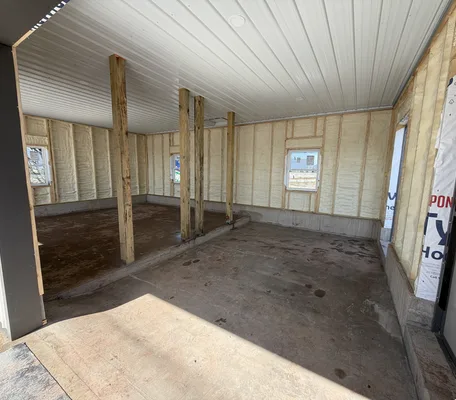
Spray foam insulation filling the stud wall cavities of a new garage build in central Pennsylvania
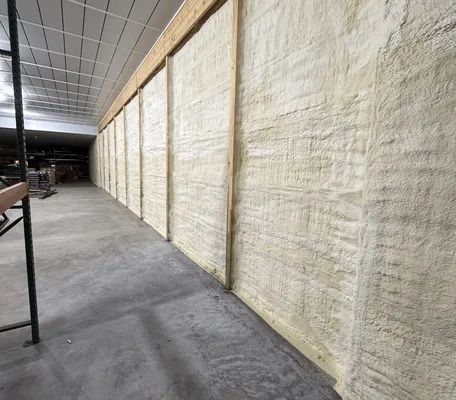
Seamless spray foam insulation coating a long commercial warehouse wall installed by Central PA Spray Foam

Why We Lead With Closed-Cell

Open-cell spray foam is a lighter, more breathable foam that costs less per square foot. It has its place — but for most projects in our area, closed-cell is the better long-term value. Here’s the difference it makes:

  • Roughly double the R-value per inch — R-7.1 versus about R-3.6, so you hit code and comfort targets in a shallower cavity
  • It’s its own vapor barrier — open-cell lets moisture vapor pass through; closed-cell stops it, which matters in a Pennsylvania winter
  • It plugs the gaps pests use — the denser foam closes off the voids where insects and rodents get in
  • It adds structural strength — open-cell is soft and flexible and lends no rigidity to the assembly
  • It holds up to moisture — open-cell absorbs water, which rules it out for crawl spaces, rim joists, roof decks, and metal buildings

On a tighter budget? For large open cavities and attic floors, blown-in fiberglass insulation can be a cost-effective alternative or companion to closed-cell spray foam. Not sure which fits your space? Schedule a free inspection — we’ll assess your building and your goals, then recommend the best solution.

Why Choose Central PA Spray Foam

We specialize in spray foam, not general contracting. That focus means deeper training, better equipment, and superior installation skill on every job.
  • Trained Installers — All our spray foam applicators follow manufacturer guidelines from Natural Polymers and Owens Corning. Safety, pressure, coverage, and edge work — we get every detail right.
  • Local Teams, Fast Response — Based in Lewisburg and working throughout central Pennsylvania. Quick scheduling, on-time arrival, professional crew conduct.
  • Honest Recommendations — We walk you through your options, recommend the right system for your space and budget, and never oversell.
  • Warranty Backing — Workmanship warranties on all installations; material warranties from manufacturers. We stand behind our work.
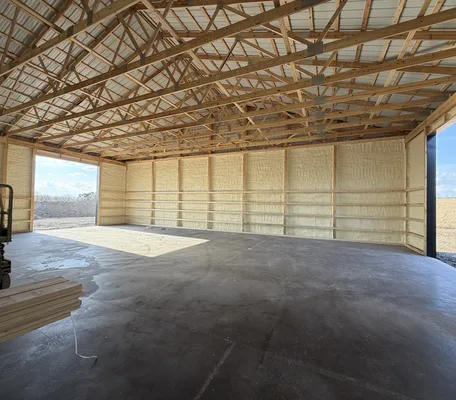
Pole barn walls insulated with spray foam under an open wooden truss roof in Pennsylvania

From Attics to Metal Buildings

Spray Foam Insulation Applications

Spray foam adapts to nearly every part of a building. These are the areas we insulate most often for homeowners, builders, and businesses across central Pennsylvania — each handled as part of a whole-home or whole-building strategy, not as a standalone product.

Attic Insulation

Your attic is the single biggest source of household energy loss; spray foam applied to the roof deck or attic floor seals air leaks and stops the heat transfer standard insulation misses.

  • Closed-cell foam at the roof deck creates an air-sealed, conditioned attic; blown-in fiberglass suits vented attic floors on a budget.
  • Sealing attic air leaks eliminates ice dams, cold second-floor rooms, and HVAC strain — attics drive 25–30% of whole-home energy loss.
  • Central Pennsylvania attics target R-38 to R-49; most attic projects pay back in 3–7 years.

Roofing Decks

Spray polyurethane foam bonds directly to flat and sloped roof decks, delivering seamless, continuous coverage that boosts thermal performance on residential and commercial roofs.

  • Closed-cell foam is the standard for roof decks, delivering R-7.1 per inch along with the moisture resistance an exterior assembly demands.
  • Continuous foam keeps the deck surface warm to prevent condensation and eliminates air infiltration, while shielding the membrane from UV and thermal stress.
  • Central Pennsylvania residential decks target R-30 to R-38; flat roofs need foam sloped 1/8 inch per foot minimum toward drains.

Crawl Space Insulation & Encapsulation

Spray foam and vapor barriers encapsulate crawl spaces into sealed, dry, conditioned buffer zones that protect the foundation and cut whole-home energy loss.

  • Spray foam seals and insulates crawl space walls and the rim joist, eliminating major air-leak paths that account for 15–20% of whole-home energy loss.
  • Closed-cell foam on the walls doubles as the vapor barrier, while a heavy-duty ground cover stops soil moisture from rising and dehumidification keeps humidity below 50–60% to prevent mold and wood rot.
  • Encapsulation reduces whole-home heating and cooling costs by 10–20% and blocks the damp, moldy air and pests common in central Pennsylvania crawl spaces.

Basement & Rim Joist Insulation

The rim joist and exposed basement walls are among the largest uninsulated areas in most homes; spray foam seals them to stop thermal bridging and moisture intrusion.

  • Closed-cell spray foam on foundation walls delivers R-7.1 per inch with built-in vapor control — no separate barrier needed.
  • Foam expands to fill the tight, irregular rim joist completely, sealing the largest thermal leak point and protecting floor joists from air and moisture.
  • Rim joists and basement walls account for 10–15% of whole-home heating loss, delivering fast savings through a central Pennsylvania winter; a typical rim joist job runs 1–2 days.

Wall Insulation

Wall insulation is the largest surface of the thermal envelope; spray foam and fiberglass seal cavities and deliver consistent R-value across every stud bay for new builds and retrofits.

  • Closed-cell spray foam delivers R-7.1 per inch (R-20 to R-28 per assembly); blown-in fiberglass retrofits reach R-13 to R-15 per cavity on a budget.
  • Foam fills every cavity and void for zero air leakage, addressing the air infiltration that causes 20–30% of wall heat loss.
  • Vapor management is climate-dependent (dew point, barriers vs. permeable layers); optimized walls cut whole-home heating and cooling 10–20%.

Garage Insulation

Garages are often the largest uninsulated space on a home; insulating walls and ceilings keeps the space usable year-round and protects the home’s thermal envelope.

  • Closed-cell foam is our pick throughout the garage — walls, ceilings, and the rim joist under second-story rooms — because it handles the water exposure and temperature swings a garage takes.
  • Foam eliminates thermal bridging and fills the irregular framing common in older garages without compression, resisting moisture infiltration in humid climates.
  • Central Pennsylvania targets R-15 to R-21 walls and R-30 to R-38 ceilings, with payback often in 3–5 years on attached garages.

New Construction Insulation

Applied at the framing stage, spray foam gives builders continuous air-sealing and optimal placement before drywall goes up — the ideal moment to build a tight thermal envelope.

  • Closed-cell foam installed in open wall, roof, and rim cavities delivers seamless coverage with no retrofit compromises.
  • Air-sealing at framing prevents drafts, moisture paths, and thermal bridging for the life of the building.
  • Pairs with our dedicated new construction insulation services for whole-build energy performance and code compliance.

Pole Barn & Agricultural Insulation

Spray foam suits pole barns and farm structures because it spans large open bays without structural supports and seals the envelope against moisture and pests.

  • Closed-cell foam is specified for livestock barns (high moisture) and sealed grain bins; blown-in fiberglass is a budget option for dry storage and hay barns.
  • Closed-cell blocks the humidity infiltration critical in dairy, poultry, and swine facilities and prevents mice, birds, and insects from nesting in the insulation.
  • Pennsylvania livestock barns target R-15 to R-25 walls (R-19+ where animals are housed); insulation must be coordinated with ventilation to prevent condensation.

Metal Building Insulation

Steel conducts heat and cold directly inside, causing condensation and extreme temperatures; spray foam bonds to metal and seals every joint and fastener to stop both.

  • Closed-cell spray foam is strongly recommended (R-13 to R-21 typical); softer, breathable materials trap moisture against the metal and worsen condensation.
  • Foam keeps the interior metal surface above dew point and acts as a continuous vapor barrier, blocking humid air from reaching cold steel and eliminating condensation.
  • Central Pennsylvania targets R-15 to R-19 and the vapor barrier cannot be skipped; for large commercial insulation buildings, condensation risk peaks during spring and fall temperature swings.

Let’s Talk

Ready to Get Started?

Whether you’re sealing an attic, crawl space, or your whole home, our team is ready to help you upgrade to high-performance spray foam. Reach out for a free, no-obligation estimate.

(570) 412-5613   Get a Free Estimate

Your Questions Answered

Spray Foam Insulation Questions

We do, and we’ll always go over the benefits of open-cell versus closed-cell for your project. Closed-cell (R-7.1/inch) is our primary product because it delivers roughly twice the R-value per inch, adds structural strength, acts as its own vapor barrier, and plugs the gaps pests use to get in. Open-cell (R-3.6/inch) costs less and stays breathable, which can suit certain interior applications. We’ll inspect your space and walk you through both before you decide.

Properly installed closed-cell spray foam can last 50+ years without settling or losing R-value. Unlike fiberglass batts, which compress and sag over time and leave gaps at the top of the cavity, foam holds its shape and maintains its thermal and air-sealing performance for the life of the building.

Yes. Closed-cell spray foam acts as an air and vapor barrier, keeping surfaces above dew point and stopping the humid air that causes condensation—especially valuable in crawl spaces, rim joists, and metal buildings across central Pennsylvania.

Most projects finish in 1–3 days. A single attic or rim joist job is often one day; whole-home spray foam or crawl space encapsulation runs 3–5 days depending on size and complexity. We provide a clear timeline during your free inspection.

Batts are the pink or yellow rolls most older homes were built with. They’re cheap, but they only slow heat down — they don’t stop air. Closed-cell spray foam does both, and here’s what that difference buys you:

  • About double the R-value per inch — R-7.1 versus roughly R-3 to R-4 for batts, so you get more performance out of the same cavity depth
  • A real air seal — foam expands into every gap, crack, and irregular space; batts get cut around wiring and pipes and leave the leaks behind
  • No sagging or settling — batts compress over the years and pull away at the top of the wall; foam stays exactly where we sprayed it
  • Built-in moisture control — closed-cell foam is its own vapor barrier, while damp batts lose R-value and can hold moisture against your framing
  • Structural strength and pest resistance — foam stiffens the assembly and plugs the gaps insects and rodents travel through; batts do neither

Our Service Area

Serving Central Pennsylvania — Lewisburg to Harrisburg to State College

We install closed-cell spray foam insulation for homes, farms, and businesses throughout central Pennsylvania. Local crews, fast response, and the same honest work on every job — and we’ll cross state lines for the right project.

Lewisburg & the Susquehanna Valley

Our home base. Full insulation service for Lewisburg, Mifflinburg, Milton, Danville, Sunbury, Selinsgrove, Bloomsburg, and the surrounding communities.

Harrisburg & the Capital Region

Homes, businesses, and new builds across Harrisburg, Camp Hill, Mechanicsburg, Hershey, Carlisle, and the greater capital area.

State College & Centre County

Insulation for the Centre County region — State College, Bellefonte, Boalsburg, Philipsburg, and the surrounding valleys.

Between those three points is our core service area, and we cover plenty of ground around them — including Williamsport, Lock Haven, and Lewistown. If your town isn’t listed, call us. We’ll cross state lines for the right project, too. Learn more on our service area page, or reach out to confirm coverage and schedule a free inspection.

(570) 412-5613   Contact Us

Let’s Get Started — Ready to Upgrade to Spray Foam?

Spray foam delivers energy savings that pay back for years. Our team will inspect your space, recommend the right system, and install it with quality you can trust. Most projects are complete in 1–3 days.

Every project starts with a free, no-obligation inspection and estimate. We’re family-owned and operated, licensed in Pennsylvania (HIC #PA197062), and we install trusted materials from Natural Polymers and Owens Corning — wherever your project is in central Pennsylvania.

© Red Barn Media Group 2026